





What Is Local SEO and How Does Local Search Engine Optimization Work in 2026?

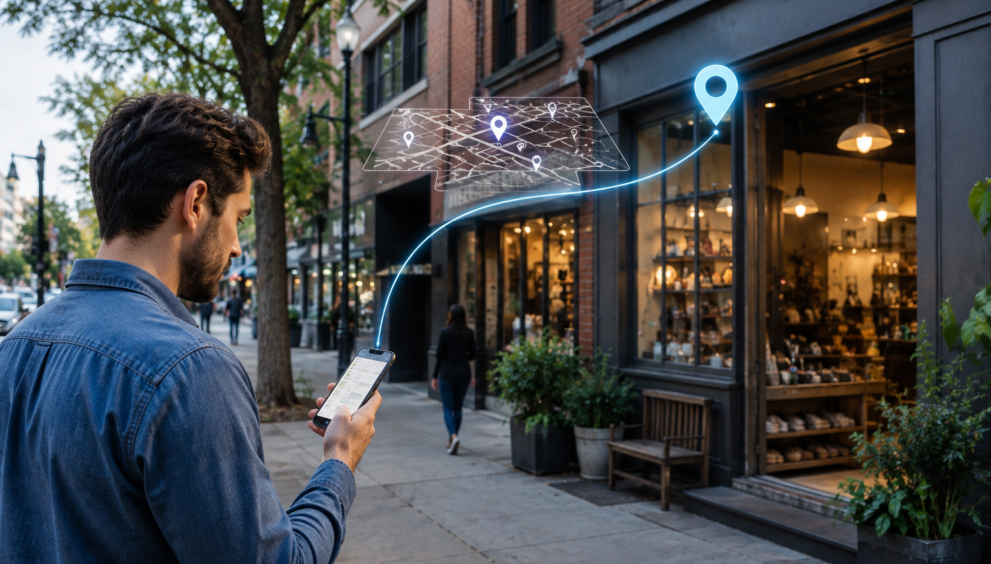
Local SEO is the process of optimizing your business’s online presence so you show up when someone nearby searches for what you sell. That’s it. That’s the whole concept, and if anyone’s made it sound more complicated than that, they’re probably trying to sell you something.
I’ve spent the last three-plus years doing this for local and multi-location clients, and the question I get asked most in discovery calls is some version of “what is a local SEO, actually, and how is it different from the SEO we’re already paying someone for?” So let’s start there, because it matters more than most agencies let on.
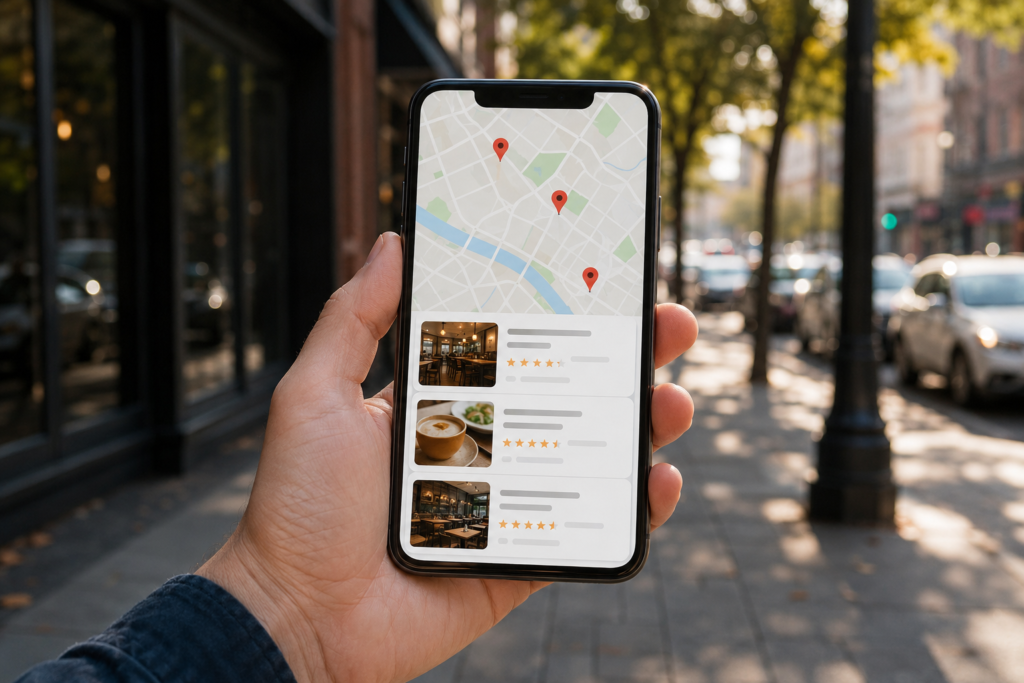
Traditional SEO is built to help a website rank for broad, often national or global, keywords. Local SEO does something narrower and, frankly, more commercially useful for most small and mid-sized businesses: it optimizes your visibility for geographic search intent searches tied to a city, a neighborhood, or “near me.” Google Search, Google Maps, and the Local Pack (that map with three business listings above the organic results) are where local SEO plays out, and increasingly, so are AI-powered answer engines, which I’ll get into further down.
How does local search engine optimization help local businesses, in plain terms? It puts you in front of people who are close by and already looking to buy not people three states away casually browsing. That’s the value proposition, and it’s why local SEO tends to convert better than almost any other channel a small business can invest in.
How is local SEO different from traditional SEO? Traditional SEO optimizes a website. Local SEO optimizes a business’s presence across a website, a Google Business Profile, and a web of citations and reviews three assets working together instead of one.
What types of searches does local SEO target? In my experience, they fall into a handful of predictable patterns: “[service] in [city]” (e.g., “roofer in Islamabad”), “[service] near me,” “best [business] in [city],” and direct Google Maps searches.
Where can local SEO help you appear? Four places, mainly: the Local Pack, Google Maps, standard organic results, and location-based search features like the “near me” carousel.
Here’s the part that surprises almost every new client I onboard: can a business rank in local search without a website? Yes. This is one of the most underrated facts in local SEO, and it’s something Wikipedia’s overview of local search engine optimization confirms: a well-optimized Google Business Profile alone can get you into the Local Pack, even before your site exists. I’ve seen this play out with service-area businesses that didn’t have a live site and were still pulling calls off Maps. It’s not the ideal long-term setup, but it proves the point: your GBP is not a “nice to have.” It’s arguably your most important local SEO asset, full stop.
Why Is Local SEO Important for Local Businesses in 2026?
I lead with these three numbers in almost every pitch deck, because nothing convinces a skeptical business owner faster than data:
| Stat | What It Means |
|---|---|
| 46% | of all Google searches have local intent |
| 78% | of people who search for something nearby on mobile visit that business within a day |
| 28% | of local searches result in a purchase |
Sit with that for a second. Nearly half of all Google queries are people looking for something close to them, and when they search on mobile, they’re not window-shopping, most visit in person within 24 hours, and more than a quarter of those searches end in a sale. That’s not top-of-funnel awareness traffic. That’s a customer standing at your door with their wallet out.
Based on my experience running local campaigns, this is exactly why local SEO tends to attract higher-intent customers than almost any other acquisition channel. Someone typing “plumber near me” has already decided they need a plumber; you just need to be the one they find first. And the flip side is uncomfortable but true: if your business isn’t optimized for local search, you’re not losing “some” traffic. You’re invisible to the 46% of searchers who were, statistically, looking for exactly what you offer.
How Does Local SEO Work and What Local Ranking Factors Does Google Use?
Google’s local algorithm comes down to three pillars, and once you understand them, most local SEO decisions become obvious.
| Factor | What It Means |
| Relevance | How well your business matches the search categories, services, keywords, intent |
| Distance / Proximity | How close your business is to the searcher |
| Prominence | How well-known and trusted your business is reviews, backlinks, citations, brand mentions, overall reputation |
For the organic “blue link” results underneath the map, Google also weighs the standard organic factors: content quality, on-page SEO, technical SEO, and site performance.
Here’s how I explain it to clients who want the short version: you can’t control distance that’s the searcher’s location, not yours but you have almost full control over relevance and prominence. That’s where the effort should go. A business two miles further away with better reviews and a tighter GBP will often out-rank the closer competitor.
What Is the Difference Between Local SEO and Traditional SEO?
| Factor | Traditional SEO | Local SEO |
| Goal | Broad keywords | Geo-specific queries |
| Key asset | Website | GBP + website |
| Signals | Backlinks, content, technical SEO | GBP, NAP, reviews, local backlinks |
| SERP | Organic results | Local Pack, Maps, organic |
| Website required? | Yes | Not always |
The practical takeaway: if you’re a single-location or service-area business, your Google Business Profile deserves at least as much attention as your website homepage for a lot of my clients, it deserves more, because it’s the first thing a nearby customer actually sees.
What Are the Core Local SEO Tasks Every Business Should Complete?
This is the operational backbone. I’ve run this exact checklist or something close to it for every local client I’ve worked with, and it breaks into seven areas.
1. Claim and optimize your Google Business Profile. Choose an accurate primary category and relevant secondary categories, fill in complete NAP details, upload photos, videos, and business attributes, post regular GBP updates, and stay on top of reviews and Q&A.
2. NAP citations and consistency. NAP stands for Name, Address, Phone and it needs to be identical, down to the abbreviation, everywhere it appears: your website, Yelp, Apple Maps, Bing, Facebook, and trusted industry directories. Inconsistent NAP is one of the fastest ways to confuse Google’s trust signals.
3. Reviews. Encourage customers to leave Google reviews, respond to both positive and negative ones (ignoring negative reviews is worse than getting them), and pay attention to review velocity. A steady trickle of new reviews signals an active, trusted business more than a one-time burst.
4. Local keyword research. Target “[service] in [city]” and “[service] near me” patterns using Google Autocomplete, Keyword Planner, and competitor analysis.
5. On-page and local content. Location keywords belong in title tags, meta descriptions, headers, and body content. If you serve multiple cities, build dedicated location landing pages, and publish locally-focused content community news, area guides, local events.
6. Local link building. Local newspapers, local blogs, chambers of commerce, and business partners are your best sources. Sponsoring local events is an underused way to earn these naturally.
7. Technical local SEO. Implement LocalBusiness schema markup, make sure your site is mobile-friendly and fast, and embed Google Maps on your contact or location pages.
What Are the Most Important Local SEO Strategies for Different Types of Businesses?
Local SEO isn’t one-size-fits-all, and this is where most generic guides fall short. A few patterns I’ve seen work across business types:
- Multi-location businesses / franchises need a dedicated, unique location page per city, never a templated page swapping only the city name plus a consistent NAP structure across every listing.
- Service-area businesses (SABs) like plumbers, cleaners, and tutors often don’t have a public storefront address, so their GBP setup and service-area radius settings matter more than almost anything else.
- E-commerce and hybrid businesses offering local pickup or delivery should treat their “local” presence as a parallel channel to their online store, not an afterthought.
- Industry-specific approaches differ meaningfully: restaurants lean heavily on photos and review velocity, dentists and law firms lean on trust signals and citations, real estate leans on hyperlocal content, and home services lean on service-area pages.
- B2B and local IT/consulting businesses can still benefit from local SEO even without foot traffic, by targeting “[service] company in [city]” queries.
- Startups with no reviews yet should focus early effort on GBP completeness and citations, since those don’t require existing authority to build.
- International and remote/hybrid businesses (coworking spaces, virtual offices) need country-specific GBP and citation strategies rather than one global profile.
How Do You Optimize for Google Maps and Local Pack Rankings?
Maps visibility comes down to the same relevance-distance-prominence framework, but with more weight on GBP completeness and review signals specifically. As I mentioned earlier, you genuinely can rank on Google Maps without a website. I’ve seen it happen but reviews, citations, and category accuracy do the heavy lifting in that scenario.
How Does AI Change Local SEO in 2026?
This is the section I get the most questions about right now, and for good reason. Search is fragmenting. AI Overviews, conversational search, and answer engines are pulling clicks away from traditional blue links Ahrefs data cited via AlmCorp puts AI Overviews in roughly 29% of non-logged-in search sessions, and in a NewzDash survey of news SEO experts, 89% said AI Overviews and AI Mode are a threat to their traffic.
Based on my experience adjusting client strategies this year, entity clarity and trust signals matter more than ever, because AI systems pull from structured, well-labeled information rather than parsing loosely written pages. LocalBusiness schema markup isn’t just a technical SEO checkbox anymore it’s how you make your business legible to an AI system trying to answer “best dentist near me” conversationally.
John Shehata, CEO of NewzDash, put it well when he said search, Discover, video, and AI answers now function like different doors into the same building trust problems in one surface show up everywhere else. That framing has genuinely changed how I think about consistency across a business’s entire digital footprint, not just its website.
What Are the Latest Local SEO Trends and Ranking Changes to Watch in 2026?
A few developments worth tracking, based on the research and expert commentary I’ve pulled together this year:
- AI Search Visibility is becoming a measurable local ranking factor, not just a nice-to-have.
- Brand trust signals are increasingly what separates businesses Google “recognizes” from ones it merely indexes.
- Geo-grid rank tracking now lets you see rankings at the ZIP code or neighborhood level, rather than one blended city-wide position.
- Multi-platform reviews across Google, Yelp, and Facebook all feed into prominence not just Google reviews alone.
- Conversational search is shifting how people phrase local queries, from short keywords toward full questions.
- Zero-click and answer-engine optimization matter because, per a 2026 priority ranking from news SEO experts, 58% ranked traffic diversification beyond Google as a top priority, ahead of AI/LLM optimization at 26%.
- Entity-first SEO and E-E-A-T are replacing keyword density as a core credibility signal.
| 2026 Content Priority | % of Experts Ranking It Top |
| Traffic diversification beyond Google | 58% |
| E-E-A-T and trust signals | 47% |
| Topical and entity-driven SEO | 42% |
| Google Discover strategy | 42% |
| Optimizing for AI/LLMs | 26% |
| Technical SEO fundamentals | 26% |
| AI Overview optimization | 26% |
What Are the Best Local SEO Tools for Keyword Research, Rankings, Citations, and Audits?
For local keyword research, I still lean on Google Autocomplete, Google Keyword Planner, and manual competitor analysis unglamorous, but reliable. For rank tracking, geo-grid tools that show performance across a grid of points on a map (rather than one city-wide number) give a far more honest picture of where you’re actually winning and losing. Citation management tools help you catch NAP inconsistencies across directories before they quietly hurt your prominence score.
How Do You Perform a Complete Local SEO Audit?
Every audit I run covers the same ground: GBP completeness, NAP consistency across citations, review volume and response rate, keyword and search-intent alignment, local landing page quality, backlink profile, schema and technical SEO, and current Local Pack/Maps visibility. If you want a sense of what this looks like in practice for your business, that’s exactly the kind of assessment we walk clients through.
What Local SEO Mistakes Should Businesses Avoid in 2026?
The repeat offenders I see, in order of how often I catch them: inconsistent NAP information across directories, fake or incentivized reviews (a fast way to get flagged), keyword stuffing inside the GBP business name field, duplicate or thin location pages for multi-location businesses, ignoring negative reviews instead of responding, over-indexing on Google traffic alone, and increasingly in 2026 ignoring AI search visibility entirely.
How Can Voice Search Improve Local SEO and “Near Me” Visibility?
Voice search through Alexa, Google Assistant, and Siri leans heavily on conversational, question-based phrasing rather than short keywords. Optimizing for it means writing content that answers direct questions naturally (“What’s the best pizza place near me that’s open now?”) rather than just stuffing in “[service] near me” as a keyword fragment.
How Does Local SEO Work With Google Ads and Local Services Ads?
Organic local SEO and paid local ads aren’t competing budgets. Local SEO data (which keywords convert, which locations perform) can directly inform where you spend on Google Ads and Local Services Ads, and a strong organic Local Pack presence often lowers the cost of paid clicks by reinforcing trust before someone even clicks the ad.
What Do Real Local SEO Case Studies Reveal?
Numbers convince people faster than adjectives, so here are two from the research that are specifically local-service examples: one local services business combined helpful content, structured data, and link building to reach 8,305 monthly sessions and 234 top-3 ranking keywords. Another local service provider overhauled its service pages, optimized its GBP, and grew domain authority to land 50% more new client leads and a 21.33% increase in monthly sessions. Across the broader 2026 case study set I reviewed, results ranged from a B2B SaaS company seeing over 700% growth in AI referral traffic after improving AI extractability, to an e-commerce site seeing a 2,550% traffic increase purely from fixing on-page SEO issues.
The lesson across all of them: structured data, consistent content investment, and GBP optimization show up as recurring themes regardless of industry.
How Should Local Businesses Measure Local SEO Success in 2026?
Rankings and traffic alone don’t tell the full story anymore. I track local rankings, Maps and Local Pack visibility, organic traffic, calls, leads, conversions, review volume, citation accuracy, and increasingly, brand and AI mentions since a business can be “visible” in an AI Overview without a single click being recorded. Reports should tie rankings back to leads and revenue, not just position changes, because a #1 ranking that doesn’t generate calls isn’t actually a win.
What Does a Complete Local SEO Strategy Look Like in 2026?
Pulling this all together: start with GBP, reviews, and citations as your foundation, layer in local content and topical authority, add entity-first structuring and E-E-A-T signals, optimize for both search engines and AI systems, and diversify visibility beyond Google alone.
What Is the Future of Local SEO Beyond 2026?
AI isn’t replacing local SEO, it’s expanding what “ranking” even means. Trust, entity clarity, and owned audiences (email lists, communities, direct channels) will matter more as zero-click and AI-mediated search grow. My honest advice to clients: start building trust signals and structured data now, because retrofitting them later is always harder than building them in from day one.
What Are the Most Common Questions About Local SEO?
What is a local SEO / what is local search engine optimization?
The practice of optimizing your business to appear in geographic, location-based search results.
What is local SEO marketing / what are local SEO services?
The ongoing marketing discipline and the professional services built around GBP optimization, citations, reviews, local content, and local link building.
How do you do SEO for a local business / how do you improve local SEO?
Start with GBP completeness, NAP consistency, review generation, and locally-targeted content in that order of priority.
What is local SEO keyword research?
Finding search terms with geographic or “near me” intent specific to your services and city.
What are local SEO citations?
Online mentions of your business’s NAP details across directories and platforms.
What is a local SEO audit?
A structured review of your GBP, citations, reviews, content, and technical SEO to find gaps.
What is local maps SEO?
Optimizing specifically for visibility within Google Maps and the Local Pack.
What Are the Key Takeaways About Local SEO in 2026?
Local SEO is essential for any business serving a specific geographic area; the 46/78/28 stats alone make that case. GBP, reviews, citations, and local content remain the fundamentals, but AI search, entity clarity, and trust signals are no longer optional extras; they’re becoming part of the baseline. And based on everything I’ve seen this year, the businesses that measure visibility and revenue instead of vanity rankings alone are the ones actually adapting well. If you’re not sure where your business currently stands on any of this, that’s genuinely the first place to start auditing before you optimize.


What Is AI Search? How It's Changing SEO in 2026
27th Aug 2026[…] What Is Local SEO and How Does Local Search Engine […]